
“The 1971 Recording That Reflected the King’s Spirituality and Vocal Sensitivity”
Amazing Grace – Elvis Presley (1972): The Spiritual Essence of the King at His Most Intimate
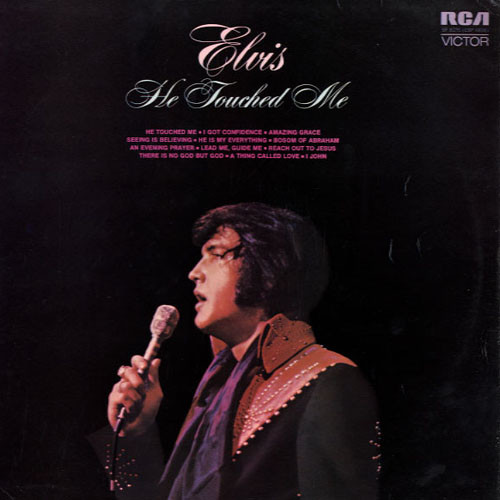
“Amazing Grace” is one of the most widely recognized Christian hymns in the world, composed by John Newton in the late 18th century. But in 1971, Elvis Presley—then in a mature and introspective stage of his career—gave the hymn a new emotional dimension. His interpretation, included on the album He Touched Me (1972), has become one of the most respected versions within his religious repertoire.
An Intimate and Reflective Elvis in the Early 1970s
In the early 1970s, Elvis was going through a very particular moment in his life. Following the success of the 1968 Comeback Special and his triumphant return to live performances, he entered a period marked by contrasts:
- A demanding schedule of Las Vegas engagements and constant touring.
- A personal life filled with pressure and emotional strain.
- A growing need to return to the music that truly moved him: gospel.
From childhood onward, Elvis found in religious music a source of comfort, inspiration, and deep emotional grounding. Gospel was not just another genre—it was part of his identity.
During this period, “Amazing Grace” became an intimate reflection of a man searching for peace, meaning, and spiritual connection.
The March 14, 1971 Recording Session at RCA Studio B
The March 14, 1971 session belongs to the legendary Nashville recordings, where Elvis worked with highly respected session musicians known as “The Nashville Cats.”
Key participants included:
- James Burton – lead guitar and Elvis’s faithful musical partner
- David Briggs – piano, central to the album’s gospel sound
- Norbert Putnam – bass, with remarkable subtlety
- Charlie McCoy – harmonica and multi-instrumentalist
- Kenny Buttrey – drums
- The Imperials & The Jordanaires – gospel vocal groups providing rich harmonies
The atmosphere at RCA Studio B was relaxed and deeply respectful. Elvis was entirely at ease in these gospel sessions, and this comfort allowed “Amazing Grace” to be captured with natural emotion and sincerity.
A Detailed Look at Elvis’s Vocal Interpretation
Elvis’s rendition of “Amazing Grace” is considered one of his most intimate and reflective gospel performances. Key characteristics include:
1. Controlled and Emotionally Focused Phrasing
He sings each line with intention, allowing the spiritual weight of the lyrics to resonate clearly. His phrasing is measured, heartfelt, and deeply expressive.
2. Hints of Soul and Southern Gospel
While the hymn’s melody remains recognizable, Elvis weaves in soul-infused nuances and subtle gospel embellishments, especially during the song’s closing lines.
3. A Mature, Warm, Resonant Voice
By 1971, Elvis’s voice had evolved:
- His lower register had become richer and more resonant.
- His vibrato was wider and more controlled.
- His emotional delivery was more nuanced.
Many fans and music historians consider this among his finest sacred performances, comparable to “How Great Thou Art.”
4. A Transparent Spiritual Connection
Elvis is not performing for commercial appeal here—he is singing with conviction and sincerity. His emotional connection to the hymn is unmistakable.
The Album “He Touched Me” (1972): Elvis’s Third Major Gospel Project
Released on March 31, 1972, He Touched Me was Elvis’s third and final full gospel album, following:
- His Hand in Mine (1960)
- How Great Thou Art (1967)
The album blended:
- Contemporary Christian compositions
- Traditional hymns
- Modern spiritual arrangements
“Amazing Grace” played a central role thanks to its balance between traditional reverence and modern gospel styling.
The album went on to win the Grammy Award for Best Sacred Performance, further solidifying Elvis’s standing within the gospel genre—a part of his career he valued deeply.
Reception and Legacy of Elvis’s Version
Initial Reception
Although not released as a single, “Amazing Grace” was warmly received by gospel fans and critics, who praised its honest and heartfelt delivery.
Long-Term Legacy
Over the years, the song has become one of the most cherished gospel tracks in Elvis’s catalog.
Inclusion in Compilations
It appears in numerous gospel and spiritual compilations, highlighting its enduring significance.
Use in Ceremonies and Memorials
Thanks to its solemn and reflective nature, Elvis’s version is often used in:
- Funerals
- Memorial services
- Religious gatherings
- Commemorative events
A Window into Elvis’s Private Soul
“Amazing Grace” is not part of Elvis’s commercial “hits.”
Instead, it reveals:
- His personal beliefs
- His emotional struggles
- His spiritual grounding
- His authentic self away from fame and spectacle
Personal Significance for Elvis Presley
Elvis frequently stated that gospel was the genre he loved singing the most. He performed gospel songs backstage, in after-hours jam sessions, and during private gatherings. To him, gospel music was not entertainment—it was nourishment.
His version of “Amazing Grace” reflects that intimacy. It is sung with respect, vulnerability, and a deep connection to the hymn’s themes of redemption and divine compassion.
Conclusion: A Performance That Reveals the Deepest Elvis
Elvis Presley’s “Amazing Grace”, recorded in 1971 and released in 1972, stands as one of the most heartfelt and spiritual performances of his entire career. Within his gospel work, it holds a special place thanks to its emotional depth, vocal beauty, and quiet reverence.
This interpretation does not aim to reinvent the hymn—it aims to feel it.
To comfort.
To uplift.
And to reveal the human behind the legend.
Through “Amazing Grace,” we hear not just the King of Rock and Roll, but a man singing from the soul.
Access all of Elvis Presley’s songs at the following link: https://elvisradio24h.com/category/elvis-songs/
The best way to thank us is by sharing this article.