
“The gentle and poetic song that revealed the King’s most intimate side”
Introduction
Although not one of Elvis Presley’s bestselling singles, “And the Grass Won’t Pay No Mind” stands as one of the most delicate and poetic songs in his entire catalog. Its recording in February 1969 and its release later that year marked a pivotal moment in the King’s artistic renaissance following his historic 1968 Comeback Special.
This article presents all relevant, complete, and contextualized information, ideal for a dedicated Elvis Presley website.
Song Origins
The song was originally written by Neil Diamond, who included it on his 1969 album Brother Love’s Travelling Salvation Show. Elvis, recognizing its emotional depth, chose to record his own version during the legendary 1969 Memphis sessions.
Elvis Presley recorded “And the Grass Won’t Pay No Mind” on February 17, 1969, at the American Sound Studios, under the production of Chips Moman. These sessions led to some of the greatest recordings of Elvis’s later career, including “Suspicious Minds,” “In the Ghetto,” and “Kentucky Rain.”
Release in 1969
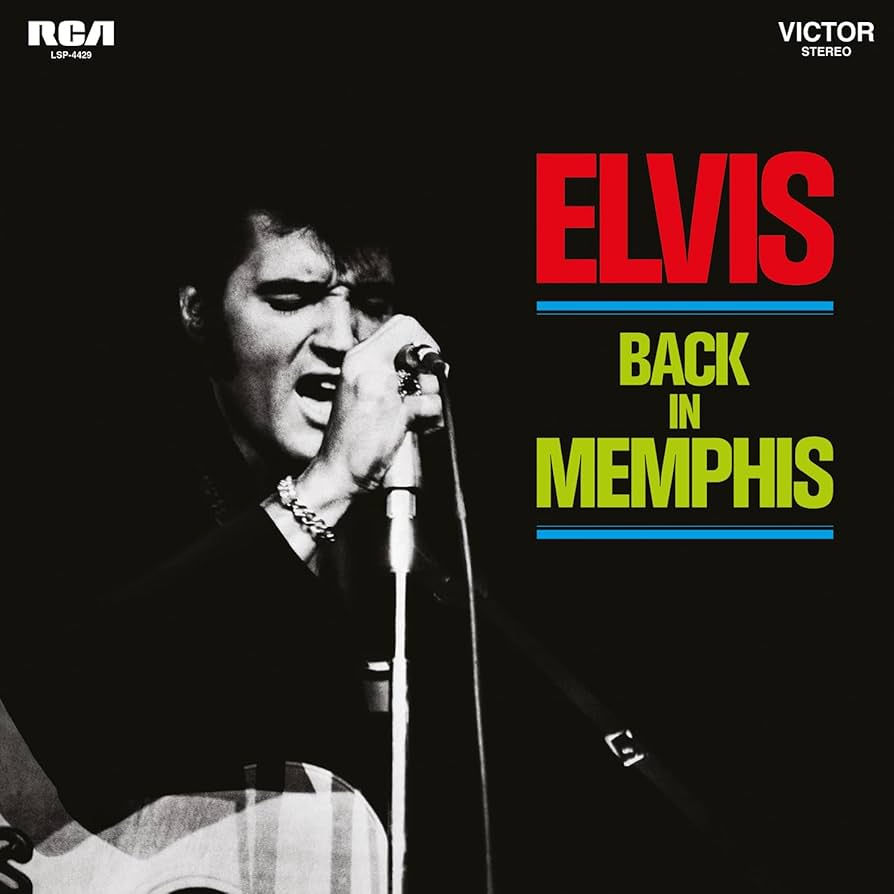
Elvis’s version was released on October 13, 1969, as part of the double album “From Memphis to Vegas / From Vegas to Memphis”, a unique project divided into two distinct concepts:
- LP 1 (From Memphis to Vegas – Elvis in Person): live recordings from his Las Vegas return.
- LP 2 (From Vegas to Memphis – Back in Memphis): studio recordings from the Memphis sessions, including this song.
“And the Grass Won’t Pay No Mind” is featured on the studio portion, where Elvis explores a softer, more introspective, and more mature sound.
Musical Style and Lyric Analysis
The song is notable for its peaceful, pastoral atmosphere. With gentle instrumentation and a slow tempo, Elvis conveys serenity mixed with a touch of melancholy.
Main Themes:
- The passage of time
- The fleeting nature of happiness
- Emotional connection and tranquility
- Nature as a refuge
Elvis delivers a restrained yet deeply expressive vocal performance, showcasing a sensitivity that contrasts with his more energetic rock and gospel recordings.
Recording at American Sound Studios
The 1969 sessions with Chips Moman marked Elvis’s return to a contemporary and creatively stimulating recording environment.
Highlights from the February 17 session:
- Elvis aimed for an intimate, emotionally rich interpretation.
- The studio band provided a warm and sophisticated musical foundation.
- The production emphasized vocal clarity and melodic richness.
This period is widely regarded as one of the artistic peaks of Elvis’s later career.
Reception and Legacy
Although never released as a single, “And the Grass Won’t Pay No Mind” has grown in esteem over time, becoming one of Elvis’s most quietly sophisticated performances from 1969.
Notable aspects of its legacy:
- It represents the artistic rebirth that marked Elvis’s return to form in the late 1960s.
- It is cherished among collectors and dedicated fans who appreciate the King’s more mature phase.
- The song demonstrates Elvis’s remarkable versatility across genres—rock, gospel, country, and tender ballads.
It has since been included in multiple reissues and remastered collections focused on the Memphis sessions.
Significance Within the Double Album
Within From Memphis to Vegas / From Vegas to Memphis, the track offers a moment of calm and introspection, balancing the album’s overall mood.
The project played a major role in re-establishing Elvis as a relevant, powerful, and renewed artist at the end of the 1960s, following years dominated by formulaic movie soundtracks.
Conclusion
“And the Grass Won’t Pay No Mind” is one of the most elegant and sensitive pieces in Elvis Presley’s body of work. Recorded during a period of creative resurgence and released on a landmark 1969 album, it captures the King’s introspective side and showcases his ability to transform even the gentlest song into a deeply emotional experience.
Access all of Elvis Presley’s songs at the following link: https://elvisradio24h.com/category/elvis-songs/
The best way to thank us is by sharing this article.