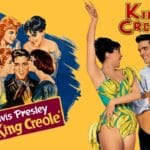

King Creole Vol. 2 (EPA-4321): Elvis Presley’s 1958 EP That Captured His Raw Cinematic Power
1) What “King Creole Vol. 2” Is and Why It Matters
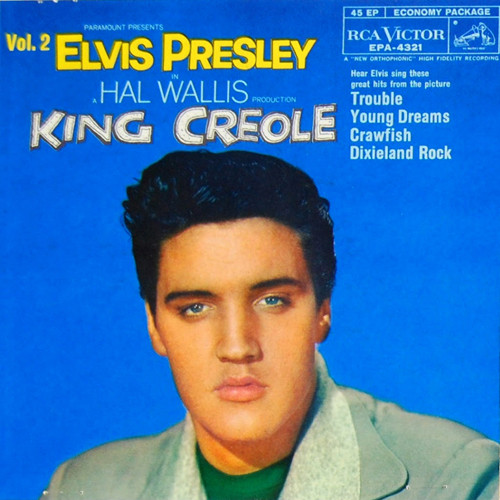
King Creole Vol. 2 is a 7-inch extended play (EP) at 45 rpm released by RCA Victor under catalog number EPA-4321. It brings together four songs connected to Elvis Presley’s creative period in 1958, a time when his film-related recordings still sounded raw, intense, and deeply rooted in rockabilly and rhythm & blues.
Although it is often cited as being released on July 28, 1958, some discographies and archival listings place its commercial availability in late July (July 29) or even August 1958. Such discrepancies were common at the time due to regional distribution and pressing schedules. For historical accuracy, it is best described as a late July 1958 release, with the specific date noted according to editorial preference.
Its importance goes far beyond its catalog number. This EP captures a more mature and dramatic Elvis, presenting songs that move between menace and swagger (“Trouble”), youthful romance (“Young Dreams”), swampy blues atmosphere (“Crawfish”), and upbeat rock energy (“Dixieland Rock”).
2) Tracklist and EP Structure (Sides and Songs)
The EPA-4321 EP follows the classic two-sided format: Side A: “Trouble” / “Young Dreams”, Side B: “Crawfish” / “Dixieland Rock”. The selection is directly tied to the King Creole musical universe and its 1958 recording sessions, offering a compact yet emotionally varied listening experience.
From a songwriting perspective, the EP stands out for its diversity. Jerry Leiber and Mike Stoller contribute the explosive, theatrical “Trouble,” while Aaron Schroeder, often collaborating with writers such as Martin Kalmanoff, Rachel Frank, or Beverly Ross, provides the more melodic rock approach of “Young Dreams” and “Dixieland Rock.” “Crawfish,” written by Fred Wise and Ben Weisman, introduces a darker, blues-inflected tone.
“Crawfish” deserves special mention, as it features a vocal duet with singer Kitty White, making it a rare entry in Elvis’s classic catalog. This duet gives the song an unusually moody and cinematic quality, enhancing the EP’s overall artistic depth.
3) Recording Sessions: When and How the Songs Were Made
The tracks on this EP originate from the January–February 1958 recording sessions held at Radio Recorders in Hollywood/West Hollywood, California, specifically for the King Creole project. Documentation places “Trouble” and “Crawfish” on January 15, “Dixieland Rock” on January 16, and “Young Dreams” on January 23, 1958.
These dates are essential for understanding the sound of the EP. Elvis was recording with a strong studio focus while keeping performance and cinematic impact in mind. “Trouble” sounds like a gritty nightclub performance, “Dixieland Rock” pushes forward with rhythmic drive, and “Young Dreams” offers a softer, confessional pop moment.
“Crawfish,” recorded during the same period, stands apart for its blues-jazz atmosphere and duet format. Together, these four songs make King Creole Vol. 2 feel like a carefully curated snapshot of Elvis’s musical versatility at a creative peak.
4) Editions, Pressings, and Collector Appeal
King Creole Vol. 2 is identified by its RCA Victor EPA-4321 catalog number and its 7-inch EP format. Discographical records document multiple pressings, including variations by pressing plants and regional releases, which was standard practice in the late 1950s.
Collectors pay close attention to details such as the presence of an original picture sleeve, label variations, and manufacturing specifics. Condition remains crucial: sleeve wear, label clarity, vinyl surface quality, and even the original center adapter can significantly affect desirability and value.
For a definitive reference section on your website, it is recommended to list the format (7”/45 rpm), catalog number (EPA-4321), side-by-side tracklist, and a note explaining the variation in reported release dates. This approach enhances both accuracy and credibility for serious readers and collectors.
5) Legacy: The EP as a Capsule of Elvis in 1958
This EP is significant because it presents Elvis at a moment when his movie-related recordings had not yet been softened or overly commercialized. The music still carries the raw edge of early rock and roll, combined with a dramatic vocal delivery that set him apart from his contemporaries.
It also serves as an ideal entry point into the King Creole era without committing to the full album. “Trouble” is often cited as one of Elvis’s most powerful late-1950s performances, while “Crawfish” adds a haunting, cinematic atmosphere rarely heard elsewhere in his catalog.
Over time, King Creole Vol. 2 has become a highly desirable release for three main reasons: its historical catalog number (EPA-4321), its connection to one of Elvis Presley’s most acclaimed creative periods, and its status as a perfectly compact, collectible vinyl artifact. For any Elvis-focused website, it represents a release that combines music, context, and vinyl culture into a single essential feature.
Explore our complete Elvis discography with detailed sheets, galleries, and analysis. View discography