
Overview: Elvis in 1957 and the Jailhouse Rock Universe
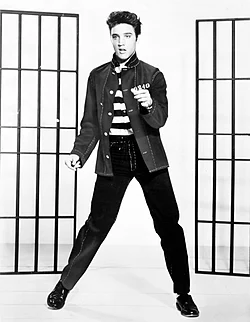
In 1957, Elvis Presley was no longer just a chart-topping singer; he had become the most visible face of rock and roll and a fast-rising movie star. Jailhouse Rock provided the perfect showcase to unite both worlds—storytelling, attitude, brand-new songs, and a youth-driven aesthetic Hollywood was still learning to embrace.
Within that framework, “(You’re So Square) Baby I Don’t Care” works as a cheeky, irresistible aside: short, punchy, humorous, and driven by a rockabilly pulse that needs no embellishment. It isn’t the explosive centerpiece like the title track, but it perfectly captures the era’s flirtation, light rebellion, and Elvis’s natural charisma.
The song also highlights a core idea of the Elvis myth: the clash between the “modern” and the “traditional.” It plays with that contrast without ever becoming heavy-handed, which is why it fits so seamlessly into a film where youth energy and public image were front and center.
Songwriting: Leiber & Stoller and the Charm of Being “Square”
The song was written by the legendary team Jerry Leiber and Mike Stoller, whose partnership defined much of Elvis’s most influential late-1950s material—especially the Jailhouse Rock project. Their signature balance of irony, memorable lines, and rhythmic instinct is unmistakable here.
The central idea is delightfully simple: calling someone “square” (1950s slang for old-fashioned or uncool) but doing it with affection. The narrator gently teases—you’re not hip, but I love you anyway. That playful tone turns the song into a miniature romantic comedy in under two minutes.
Leiber & Stoller also understood what truly mattered for Elvis: delivery. The lyrics set the stage, but the hook is how Elvis phrases each line, leans into certain words, and lets the rhythm breathe. The result feels conversational, effortless, and tailor-made for his voice.
Recording: May 2, 1957 and the Studio Work Behind the Track
Session documentation places the core recording work on May 2, 1957, during the Jailhouse Rock sessions, when backing tracks and early takes were laid down. This was part of an intensive period designed to supply both the film and its accompanying releases.
Other widely cited discographies note additional work on nearby dates (notably May 3, plus later overdubs), a common practice for movie productions. Songs were refined to match on-screen needs, edited for pacing, and polished for release, making the process more fluid than a single-day session.
One of the song’s most talked-about details is that Elvis appears to play electric bass on the recording—an unusual credit in his catalog. That small detail adds to the raw, band-centric feel of the track and reinforces its authentic rockabilly edge.
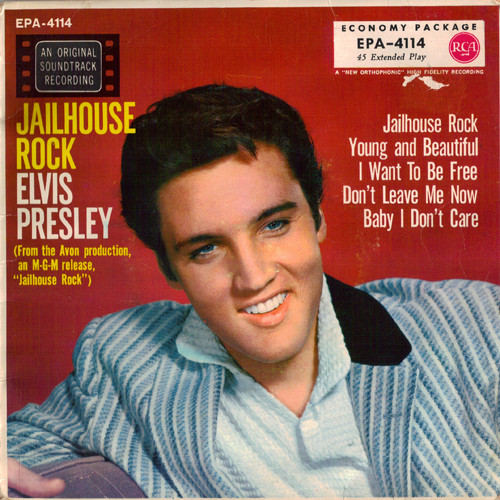
Release: The Jailhouse Rock EP (RCA Victor EPA-4114)
“(You’re So Square) Baby I Don’t Care” was released on the Jailhouse Rock extended play by RCA Victor, catalog number EPA-4114. The EP was conceived as a compact musical companion to the film and quickly became a key 1957 release.
Regarding the exact release date, two references are commonly cited: October 29, 1957 (your stated date) and October 30, 1957, which appears in several historical discographies. Such one-day discrepancies were typical at the time, often reflecting differences between shipping, retail availability, and internal label documentation.
What matters most is the context: EPA-4114 encapsulates the Elvis-1957 phenomenon—cinema and rock and roll merged into a collectible 7-inch format that defined how audiences experienced pop music in the vinyl era.
On-Screen Interpretation: Style, Attitude, and Presence
Although the song thrives on record, it is inseparable from the visual world of Jailhouse Rock. Elvis’s screen persona—confident, teasing, effortlessly cool—gives the song added meaning beyond its lyrics.
Musically, it breathes pure rockabilly: brisk tempo, clean structure, and a vocal that sounds spontaneous even though it is carefully controlled. Elvis delivers the lines as if speaking directly to someone just out of frame, creating an intimacy rare in movie musicals of the time.
This blend of short, catchy songs and strong visual identity is a major reason Jailhouse Rock endures. You don’t need context to “get” Elvis—within seconds, his personality, energy, and magnetism are unmistakable.
Reception and Legacy: A Deep Cut That Became a Classic
Over the years, “(You’re So Square) Baby I Don’t Care” has earned its reputation as a fan-favorite deep cut. It may not always top the lists, but it is frequently singled out for its freshness and timeless feel.
Its structure and attitude have also made it an easy song to revisit and reinterpret, proving how solid its foundations are. Simple lyrics, a tight melody, and an unmistakable vocal performance give it staying power far beyond its original release.
For an Elvis-dedicated website, the song has special value: it captures Elvis in 1957 at his most natural—no excess drama, just charm, confidence, and rhythm. And that, ultimately, is why Elvis became an icon: making the extraordinary feel effortless, even in a song that barely lasts two minutes.
Access all of Elvis Presley’s songs at the following link: https://elvisradio24h.com/category/elvis-songs/