
King Creole (1958): Elvis Presley’s most intense and respected album
Introduction: a key work in Elvis’s discography
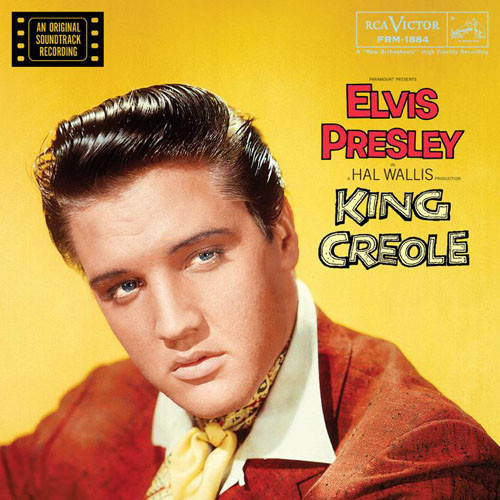
The album King Creole is regarded by critics, historians, and fans as the most solid and artistically coherent work of Elvis Presley during his classic period. Released on August 9, 1958, under catalog reference FRM1884, this LP is associated with the film of the same name but goes far beyond the traditional concept of a movie soundtrack.
Unlike many cinematic albums of the era, King Creole stands as a fully realized artistic statement, with a strong sonic identity and a deep emotional core. Elvis dives into rock and roll, rhythm & blues, and urban blues with rare intensity, revealing a vocal maturity that surprised even his harshest critics.
The album was released at a decisive moment in his personal and professional life. Only weeks later, Elvis would enter the U.S. Army, making King Creole the symbolic closing chapter of his first great creative era, capturing the artist at his most authentic and powerful.
Historical and artistic context
In 1958, Elvis Presley was the most influential artist on the planet, but also a controversial figure under immense media pressure. His rebellious image clashed with the conservative moral climate of the time, and his music was often viewed as a cultural threat.
That tension is clearly reflected in King Creole, an album darker and more urban than his previous releases. Its lyrics and atmosphere deal with conflict, ambition, and survival, moving away from the lighter teenage rock that dominated the charts.
The looming reality of military service adds a palpable emotional weight. Elvis sings with urgency and determination, as if aware that he was leaving behind a definitive artistic statement before a forced pause in his career.
Recording and sound of the LP
The recording sessions took place between January and February 1958 at Radio Recorders studios in Hollywood. Elvis was joined by his core group of musicians, enhanced by brass sections that brought an unprecedented depth to his recorded sound.
The production favored a denser, more sophisticated approach, blending blues, New Orleans jazz, and rhythm & blues influences. Piano, saxophones, and backing vocals contribute to the album’s nocturnal, cinematic atmosphere.
Vocally, Elvis delivers some of the finest performances of his career. His voice is controlled, expressive, and emotionally nuanced, proving once again that he was far more than a teenage idol—he was a formidable and serious interpreter.
Complete tracklist of the LP King Creole (1958)
The repertoire of King Creole is notable for its cohesion and balance. Each song plays a clear narrative role, reinforcing the dramatic and urban tone that defines the album as a whole.
Side A showcases the album’s most defiant energy. It opens with King Creole (2:16), written by Jerry Leiber and Mike Stoller, an unmistakable statement of intent. This is followed by As Long as I Have You (1:50), by Fred Wise and Ben Weisman, and Hard Headed Woman (1:53), written by Claude Demetrius, one of the album’s major commercial hits. The intensity continues with Trouble (2:16), again by Leiber and Stoller, and closes with Dixieland Rock (1:46), composed by Aaron Schroeder and Rachel Frank.
Side B offers greater emotional range and narrative depth. It includes Don’t Ask Me Why (2:06), by Wise and Weisman, followed by Lover Doll (2:09), written by Sid Wayne and Abner Silver. A standout track is Crawfish (1:48), performed with Kitty White and composed by Wise and Weisman, noted for its minimalist, almost hypnotic atmosphere. The album concludes with Young Dreams (2:23), by Aaron Schroeder and Martin Kalmanoff, Steadfast, Loyal and True (1:15), by Leiber and Stoller, and New Orleans (1:58), written by Sid Tepper and Roy C. Bennett, paying sonic tribute to Louisiana.
Critical reception and commercial success
Upon release, King Creole achieved significant commercial success, quickly ranking among the best-selling albums of 1958. It reinforced Elvis’s absolute dominance of the music industry at the height of his global fame.
Over time, critical reassessment has only strengthened the album’s reputation. Many music historians now consider it the finest LP of Elvis’s entire classic discography, praising its artistic unity and interpretive depth.
Unlike many soundtrack-related albums, King Creole has aged exceptionally well. Its sound remains powerful and relevant, explaining its frequent inclusion in authoritative rankings of Elvis Presley’s greatest works.
Legacy and cultural significance
King Creole occupies a central place in Elvis Presley’s legacy. It is the album that best captures his deep connection to the African American roots of rock and roll, blues, and rhythm & blues, presenting the artist at the peak of his creative maturity.
The album had a lasting influence on later generations of musicians, proving that rock and roll could be dark, narrative-driven, and emotionally complex without losing its raw power or authenticity.
More than six decades after its release, King Creole remains an essential work. It not only represents Elvis at his finest during the 1950s, but also stands as a foundational pillar in the history of the album as an artistic form in popular music.
Explore our complete Elvis discography with detailed sheets, galleries, and analysis. View discography