
“Barefoot Ballad” by Elvis Presley (1964): the lighthearted gem of Kissin’ Cousins
A singular song in Elvis’s discography
“Barefoot Ballad” is one of those songs that reveals the most relaxed and playful side of Elvis Presley during his intense cinematic period of the 1960s. It was not conceived as a major radio hit, but rather as a functional number designed to match the light, humorous tone of the film Kissin’ Cousins.
Within Elvis’s vast discography, the song stands out precisely because of its simplicity. It does not aim for the emotional depth of his classic ballads or the raw energy of the rock and roll that made him famous, but instead creates a casual, almost anecdotal atmosphere perfectly suited to the movie.
Over time, “Barefoot Ballad” has gained appreciation among collectors and devoted fans, as it clearly represents how many of Elvis’s movie songs were crafted: short, direct pieces fully integrated into a broader cinematic project.
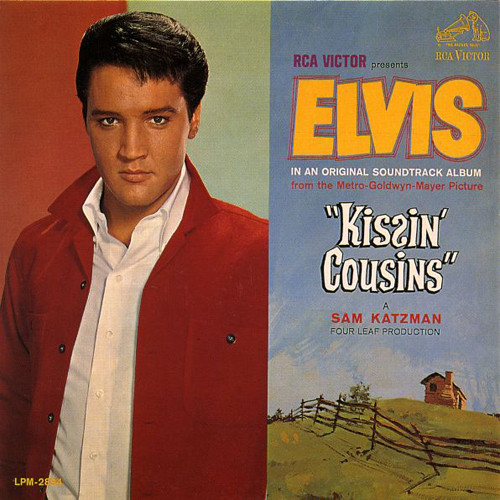
Official release and inclusion on the Kissin’ Cousins album
The song was officially released on April 1, 1964, as part of the album Kissin’ Cousins, issued by RCA Victor. This album served as the soundtrack to the film of the same name and compiled several songs recorded specifically for the production.
Kissin’ Cousins was released in both mono and stereo formats, a common practice at the time, and quickly became part of Elvis’s busy annual release schedule, which in those years combined films, albums, and constant promotional activity.
“Barefoot Ballad” thus became firmly established as part of this LP, occupying a place among the lighter, more humorous tracks on the album, in contrast to other songs with stronger romantic or country influences.
Songwriters and creative approach
“Barefoot Ballad” was written by Dolores Fuller and Lee Morris, two songwriters closely associated with composing music specifically for film projects. Their work on this song reflects a clear narrative and visual intention rather than an attempt to create a standalone commercial hit.
The song’s structure is simple and straightforward, designed to be immediately recognizable within a cinematic scene. Both the melody and lyrics are meant to support images and situations on screen, a hallmark of Elvis’s movie soundtracks from this era.
These kinds of compositions helped define the image of Elvis as an actor-singer: an artist capable of adapting to different registers and delivering performances tailored to each film, even when the songs themselves were not destined for mainstream chart success.
Recording: dates, locations, and process
“Barefoot Ballad” was recorded during the Kissin’ Cousins sessions, which took place in late September and early October 1963. The instrumental track was recorded on September 30, 1963, at RCA Studio B in Nashville, one of the most iconic studios in Elvis’s career.
Later, Elvis’s vocals were recorded on October 10, 1963, on an MGM soundstage in Hollywood, a common practice when music was directly tied to a film production. This approach allowed the vocal performance to be closely aligned with the movie’s specific needs.
The final master combines the precision of Nashville’s top session musicians with Elvis’s vocal performance recorded in a cinematic environment, offering a clear example of the close relationship between film and music that defined much of his 1960s work.
Musicians and backing vocals
The recording featured an impressive lineup of musicians. On guitars were Grady Martin, Jerry Kennedy, Scotty Moore, and Harold Bradley, with Bob Moore on bass and Buddy Harman and D.J. Fontana sharing duties on drums.
On piano was Floyd Cramer, while the instrumental color was enhanced by Boots Randolph and Bill Justis on saxophone, along with Cecil Brower on fiddle, adding distinctive country and Nashville studio textures.
Backing vocals were provided by The Jordanaires, together with Millie Kirkham, Dolores Edgin, and Winnifred Brest, all frequent collaborators whose voices played a major role in shaping the recognizable sound of Elvis’s studio recordings.
“Barefoot Ballad” within the Kissin’ Cousins universe
The song was recorded specifically for the film Kissin’ Cousins, which explains its relaxed tone and narrative character. It was never intended to function as an independent single, but as part of a cohesive audiovisual experience.
Within the album, “Barefoot Ballad” works as a complementary piece that reinforces the light, entertaining identity of the project. Its presence helps balance the record and highlights the stylistic variety Elvis brought to his movie soundtracks.
For fans, the song offers a clear window into a specific phase of his career: a period in which Elvis was fully immersed in the film industry, recording songs tailored to each production and building a catalog as diverse as it was extensive.
Conclusion
“Barefoot Ballad” may not be among Elvis Presley’s most famous songs, but it is a representative and meaningful piece from his cinematic years. Its recording history, musicians, and context help illustrate how Elvis’s creative machinery operated during the 1960s.
For dedicated followers, the song is a small gem that completes the picture of his official discography. For those exploring his work in depth, it stands as another example of the versatility and professionalism with which Elvis approached every project, large or small.
Access all of Elvis Presley’s songs at the following link: https://elvisradio24h.com/category/elvis-songs/