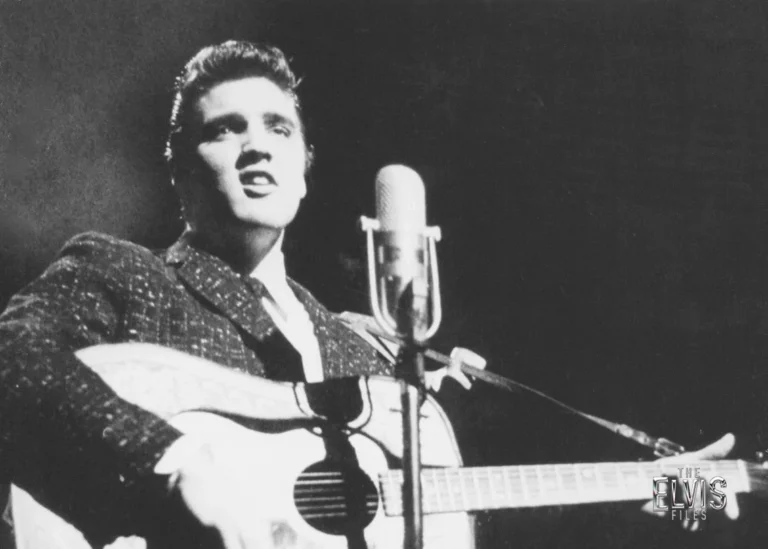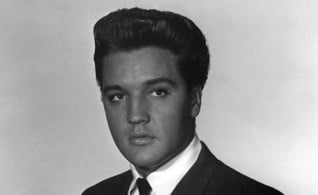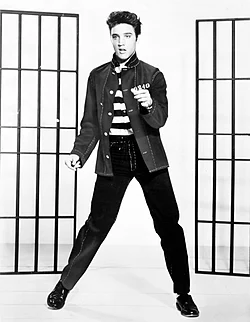

“Baby, Let’s Play House” by Elvis Presley: the rockabilly spark of Sun single 217 (1955)
Introduction: a decisive Sun-era single
“Baby, Let’s Play House” is one of those turning points where, in less than three minutes, you can understand why Elvis was about to change the musical landscape. It is not just another early recording in his catalog; it is a statement of style, attitude, and rhythm.
Released as a Sun single under the catalog number Sun 217, the song became one of the key issues of the 1954–1955 period, when Elvis, Scotty Moore, and Bill Black were shaping the language of rockabilly through instinct, experimentation, and raw energy.
Although collectors and discographies sometimes list slightly different release dates depending on documentation and distribution criteria, the most widely accepted consensus places the single’s release in April 1955, paired with “I’m Left, You’re Right, She’s Gone.”

The song’s origins: from Arthur Gunter to Elvis’ universe
Before Elvis made it his own, “Baby, Let’s Play House” was written and recorded by Arthur Gunter in 1954. The original version already contained the melodic hook and basic structure, but it left room for reinterpretation.
Elvis did not simply cover the song; he reshaped it through the Sun Records approach. Instead of treating it as standard repertoire, he turned it into a vehicle for his clipped phrasing, youthful energy, and the unique blend of country, blues, and something entirely new.
The song’s influence extended far beyond Elvis himself. A specific lyric from the track later inspired John Lennon, proving that these early Sun recordings did not remain confined to 1955 but continued to echo through popular music history.
The recording: date, place, and the “mystery” of the exact session
Your stated recording date—January 31, 1955—fits within a crucial reality: the session belongs to the late January–early February 1955 recording window at Sun Studio in Memphis, a period frequently cited by historians.
Many musical chronologies list the recording as having taken place in February 1955, sometimes assigning specific dates. This suggests the possibility of multiple sessions or differing interpretations of surviving studio documentation.
What remains undisputed is the core setting: Sun Studio in Memphis, under the creative environment fostered by Sam Phillips, with Elvis, Scotty Moore, and Bill Black pushing forward a sound defined by minimal resources and maximum personality.
Sun 217: single release, B-side, and publication date
The Sun 217 single paired “Baby, Let’s Play House” with “I’m Left, You’re Right, She’s Gone”, a combination now considered one of the most representative releases of Elvis’ Sun era for its balance of emotional tension, humor, and rhythmic drive.
Regarding the release date, your reference to March 31, 1955 appears in some collector timelines based on pressing or distribution criteria. However, most major discographies place the official release in April 1955, often citing April 10.
Regardless of the precise calendar day, the timing was perfect: Sun 217 arrived just as Elvis’ regional popularity was beginning to break outward, acting as a crucial stepping stone between local success and national recognition.
What Elvis changed: the elements that made it unforgettable
One of the most discussed aspects of Elvis’ version is its immediate impact. His recording launches with a different kind of drive, aiming for instant engagement rather than gradual buildup—an approach typical of the Sun philosophy.
The song also includes the now-famous “Pink Cadillac” reference, which Elvis substituted for a line in the original lyrics. This change tied the song more closely to his personal imagery and helped establish one of the most enduring symbols associated with his early persona.
The final result is a textbook example of rockabilly: sharp lead guitar, percussive slap bass, and a vocal delivery that balances country phrasing with R&B intensity, yet never sounds like an imitation of existing styles.
Impact: charts, radio, and live performances in 1955
“Baby, Let’s Play House” is often remembered as Elvis’ first recording to achieve strong national chart recognition, reaching number 5 on Billboard’s country chart in 1955—a milestone that signaled his growing reach beyond the South.
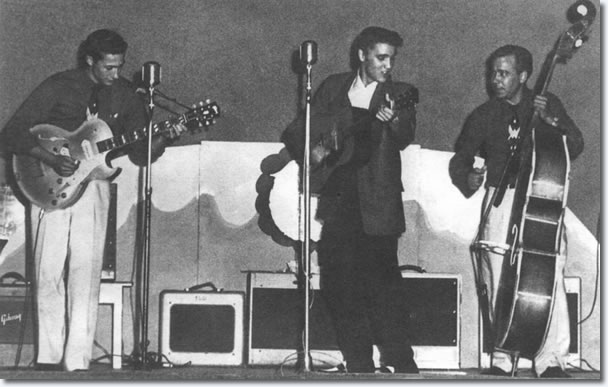
In live performances, the song fit seamlessly into his early setlists. Its driving rhythm, catchy chorus, and built-in momentum made it a powerful crowd-pleaser and an ideal showcase for his emerging stage presence.
This dual success—on record and on stage—helped solidify Elvis, Scotty Moore, and Bill Black as a tightly unified musical force, with each performance amplifying the impact of the single.
Legacy: why Sun 217 remains essential
Today, “Baby, Let’s Play House” is studied not merely as a song but as a case study in how Elvis and Sun Records accelerated the fusion of musical styles into something entirely new. It is a small recording with a massive historical footprint.
It also serves as a sonic snapshot of the Sun era: recordings made with limited technical means but guided by bold artistic decisions—when to push the rhythm, how to shape a vocal line, and how to let the guitar speak.
That is why Sun 217 continues to be collected, discussed, and celebrated. It is not empty nostalgia, but a living document of the precise moment when Elvis Presley was crossing the line from promise to inevitability.
Access all of Elvis Presley’s songs at the following link: https://elvisradio24h.com/category/elvis-songs/