
“King Creole Vol. 1 (EPA-4319): The 1958 EP That Captured Elvis Presley at His Cinematic Peak”
What Is “King Creole Vol. 1” and Why It Matters
King Creole Vol. 1 is an Extended Play (EP) by Elvis Presley, released by RCA Victor under the catalog number EPA-4319. Designed as a compact, affordable 45 rpm format, the EP offered a short but powerful selection of songs that could be enjoyed without purchasing a full-length album.
More than just a “short record,” this EP is deeply connected to the King Creole film era. It captures the atmosphere, intensity, and dramatic edge that defined Elvis’s work in 1958, a period widely regarded as one of his most artistically focused and respected phases.
For an Elvis-dedicated website, this release is significant because it illustrates how RCA packaged his music during the late 1950s. EPs like King Creole Vol. 1 served as accessible entry points for fans while reinforcing Elvis’s image as both a recording star and a cinematic icon.
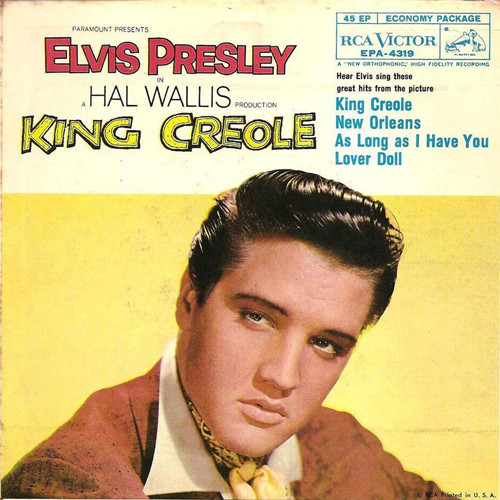
Release Date, Edition, and RCA Victor Reference EPA-4319
The catalog number RCA Victor EPA-4319 identifies the U.S. edition of King Creole Vol. 1 within the label’s Extended Play series. The EP was released in July 1958, with the official issue date recognized as July 14, 1958, placing it squarely in the peak promotional period of the King Creole project.
At the time, the EP format was a strategic tool. It allowed RCA to quickly circulate key songs associated with a major Elvis release, targeting younger buyers and households equipped with 45 rpm players. This made the EP both commercially effective and culturally influential.
From a collector’s perspective, EPA-4319 is a desirable reference. Variations in pressing, label details, and cover condition all affect its value, and copies retaining the original illustrated sleeve are especially prized among Elvis collectors worldwide.
Track List and Side A / Side B
One of the greatest strengths of King Creole Vol. 1 is its focused track selection. The EP typically includes four songs: “King Creole” and “New Orleans” on one side, with “As Long as I Have You” and “Lover Doll” on the other.
“King Creole” stands as the centerpiece, showcasing Elvis’s commanding vocal presence and raw rhythmic drive. “New Orleans” complements it by evoking a vivid sense of place, reinforcing the film’s atmosphere and narrative tone.
The flip side offers contrast and balance. “As Long as I Have You” highlights Elvis’s romantic and melodic side, while “Lover Doll” brings lightness and youthful charm. Together, the four tracks create a complete musical snapshot of the King Creole era.
Sound, Production, and the King Creole Era Style
In 1958, EPs were designed for immediacy and impact, and King Creole Vol. 1 reflects that philosophy. With no filler material, each track delivers a clear statement, making the record feel energetic and purposeful from start to finish.
This EP benefits greatly from its context. The King Creole period represents a moment when Elvis successfully balanced serious acting with powerful musical performances, and that balance is evident in the tone and pacing of the songs chosen.
As a listening experience, the EP functions almost like a multi-sided single. Each song stands on its own, yet together they form a cohesive identity that illustrates how Elvis’s catalog was carefully shaped across different formats: singles, EPs, and full albums.
Cover Art, Design, and Collector Appeal
The original sleeve of King Creole Vol. 1 is a crucial part of its legacy. Featuring a striking image of Elvis associated with the King Creole era, the cover was designed to immediately attract attention and reinforce his star power.
The presentation emphasized the connection to the King Creole project, making the EP feel like an extension of a larger artistic world rather than a random compilation. For collectors, the visual aspect is as important as the music itself.
Details such as the RCA Victor label design, typography, and catalog information add to the EP’s historical value. Displayed alongside other Elvis releases, King Creole Vol. 1 stands as both a musical artifact and a visual emblem of his late-1950s peak.
Explore our complete Elvis discography with detailed sheets, galleries, and analysis. View discography